
Production Management Software in Abu Dhabi, UAE
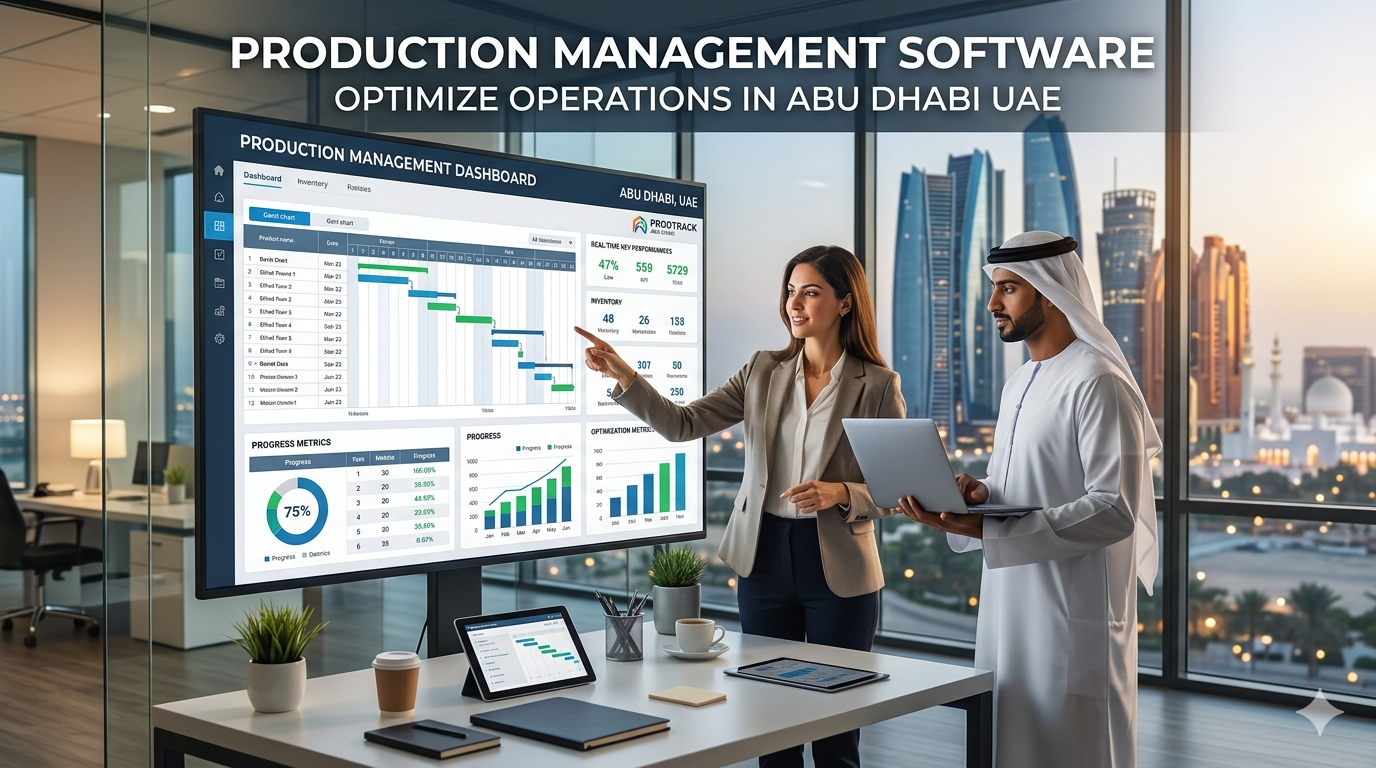
How Production Management Software Is Changing the Game for FMCG and Metal Fabrication Businesses in the UAE
If you run a manufacturing business in the UAE — whether it's an FMCG production line or a metal fabrication workshop — you already know how fast things can go wrong when operations aren't organized. A missed delivery, a stock shortage, or a machine sitting idle isn't just frustrating; it directly impacts profitability.
That's exactly why more manufacturers across the UAE are turning to production management software. Not because it's trendy, but because it delivers measurable results.
What Does Production Management Actually Mean?
At its core, production management is about making sure the right products get made at the right time, using the right resources — without unnecessary waste.
It covers:
* Production planning
* Scheduling
* Inventory control
* Quality management
* Workforce coordination
* Equipment maintenance
Modern production management software brings all these functions together in one centralized platform, providing managers with real-time visibility into shop floor operations.
Why UAE Manufacturers Can't Afford to Ignore This
The UAE has rapidly evolved into one of the leading manufacturing hubs in the Middle East. However, growth has introduced new challenges:
* Rising raw material costs
* Increasing labor expenses
* Faster customer delivery expectations
* Growing market competition
* Complex regulatory compliance requirements
Businesses still relying on spreadsheets, manual records, WhatsApp messages, and paper-based processes often struggle to keep pace with modern manufacturing demands.
Production management software helps manufacturers remain efficient, agile, and competitive.
Production Management for FMCG Manufacturers
The Unique Challenges of FMCG Production
Fast-Moving Consumer Goods (FMCG) manufacturers operate in one of the most demanding production environments.
Common FMCG sectors include:
* Food and beverages
* Personal care products
* Household goods
* Consumer packaging
Key Challenges
High Production Volume and Speed
Producing thousands of units daily leaves little room for scheduling errors. A single bottleneck can create delays across the entire production line.
Inventory Management
Too much inventory ties up working capital and warehouse space. Too little inventory can halt production entirely.
Quality Consistency
A single defective batch can result in product recalls, damaged customer relationships, and loss of brand reputation.
Unplanned Equipment Downtime
Unexpected machine breakdowns can disrupt operations and reduce productivity.
How Production Management Software Solves FMCG Challenges
Real-Time Production Monitoring
Supervisors can instantly identify bottlenecks, delays, and inefficiencies before they become major problems.
Automated Production Scheduling
The software creates realistic production plans based on:
* Customer demand
* Available resources
* Machine capacity
* Workforce availability
Inventory Automation
Raw materials are tracked from procurement to production, ensuring optimal stock levels and timely replenishment.
Quality Control Management
Built-in quality checkpoints ensure compliance at every stage of production.
Performance Analytics
Detailed reports help management identify:
* Material wastage
* Productivity losses
* Process inefficiencies
* Improvement opportunities
Benefits for FMCG Manufacturers
* Faster production cycles
* Better inventory control
* Improved product quality
* Reduced operational costs
* Increased profitability
Production Management for Metal Fabrication Workshops
Why Fabrication Businesses Face Different Challenges
Unlike FMCG manufacturing, metal fabrication often involves custom projects.
Workshops may simultaneously manage:
* Cutting
* Welding
* Machining
* Assembly
* Surface finishing
Each project may have unique requirements, specifications, materials, and delivery timelines.
Managing multiple custom jobs manually quickly becomes inefficient.
Common Challenges in Fabrication Workshops
Job Tracking Difficulties
Without a centralized system, it becomes difficult to monitor project status and delivery timelines.
Resource Scheduling Problems
Poor scheduling leads to:
* Idle machinery
* Labor inefficiencies
* Overtime expenses
Material Planning Issues
Incorrect inventory planning can delay projects and increase costs.
Inaccurate Cost Estimation
Without accurate labor and material tracking, quotations often become guesswork.
How Production Management Software Helps Fabrication Workshops
End-to-End Job Tracking
Managers gain complete visibility into every project from quotation to final delivery.
Intelligent Resource Scheduling
The system allocates:
* Machines
* Workforce
* Materials
based on actual availability and workload.
Inventory Visibility
Real-time inventory updates ensure materials are available when needed.
Accurate Cost Tracking
Actual labor hours and material consumption are recorded, enabling more accurate future quotations.
Deadline Monitoring
Managers receive alerts when projects fall behind schedule, allowing proactive corrective action.
Benefits for Fabrication Workshops
* Improved profit margins
* Better project visibility
* Reduced delays
* Enhanced customer satisfaction
* Greater operational efficiency
What to Look for When Choosing Production Management Software
Not every solution offers the same capabilities.
Key features to evaluate include:
Production Planning Tools
Can the software create realistic production schedules based on capacity and demand?
Real-Time Inventory Tracking
Does it automatically update stock levels as materials move through operations?
Shop Floor Visibility
Can supervisors monitor live production activity without relying on manual updates?
Quality Management
Are quality inspections integrated into production workflows?
Reporting Dashboards
Can management quickly access critical KPIs and operational metrics?
Workforce Management
Does the system track:
* Attendance
* Productivity
* Labor allocation
Preventive Maintenance Scheduling
Can it schedule equipment servicing before breakdowns occur?
Multi-Location Support
Can it effectively manage operations across multiple facilities?
Choosing software with these capabilities can significantly improve manufacturing performance.
The Bigger Shift Happening in UAE Manufacturing
Production management software is part of a broader transformation known as Industry 4.0.
Across the UAE, manufacturers are investing in digital technologies to:
* Improve efficiency
* Reduce manual work
* Increase productivity
* Strengthen decision-making
* Enhance competitiveness
Companies adopting digital systems are already experiencing:
* Lower waste levels
* Faster production output
* Better quality control
* Improved financial visibility
Meanwhile, businesses relying on disconnected manual systems face increasing operational challenges.
The Future of Production Management Technology
Several emerging technologies are reshaping manufacturing operations.
AI-Powered Forecasting
Artificial intelligence can predict future demand and automatically adjust production schedules.
Predictive Maintenance
Advanced analytics identify equipment issues before breakdowns occur.
IoT Integration
Connected sensors provide live machine performance data directly to management systems.
Cloud-Based Manufacturing Platforms
Cloud solutions enable remote access, real-time collaboration, and greater scalability.
These technologies are no longer future concepts — many are already available in modern production management platforms.
Manufacturers that establish a strong digital foundation today will be better positioned for future growth.
Final Thoughts
Running a manufacturing business in the UAE has never been more demanding. Rising costs, increasing customer expectations, and growing competition require smarter operational strategies.
Production management software doesn't eliminate every challenge, but it provides the visibility, control, and real-time data needed to make better business decisions.
Whether you're operating a high-volume FMCG production facility or managing a custom metal fabrication workshop, investing in the right production management system can help improve efficiency, reduce waste, increase profitability, and strengthen long-term competitiveness.
The real question isn't whether your business needs production management software.
It's how much longer you can afford to operate without it.